

There’s something strange about hitting a milestone when you’re chronically ill.
You don’t get a medal or a fanfare. Nobody bursts into the room with cake and confetti, shouting, “Congratulations, you did it!” In my case, my mobility scooter didn’t even give a cheerful beep. Which is rude, considering it beeps at other more inappropriate moments.
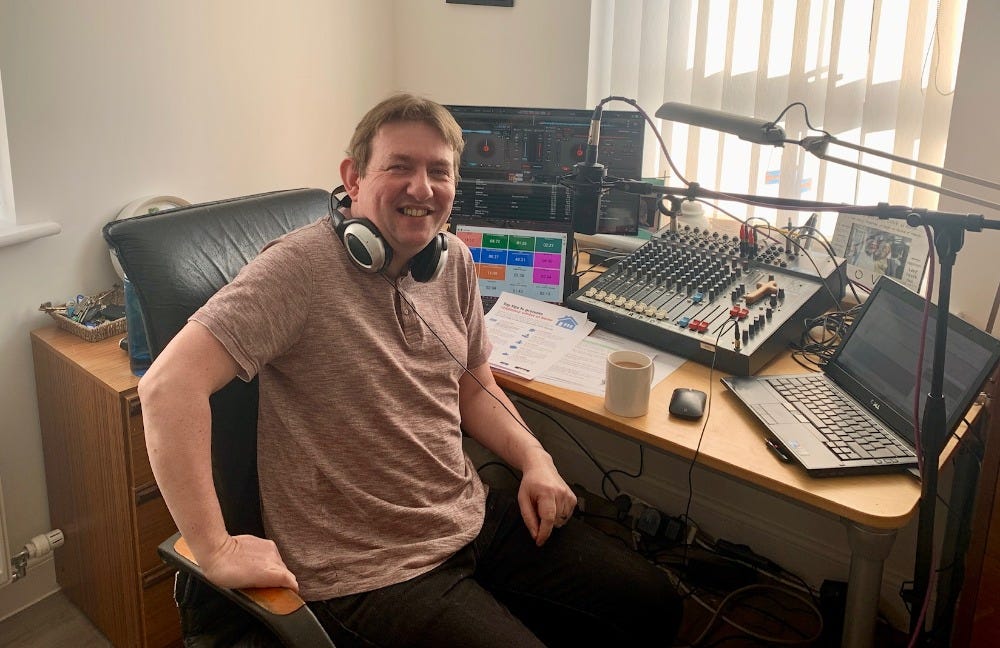
But when I hit “publish” on the 50th episode of my Life With Long Covid podcast this week, something inside me paused for a moment. Because 50 episodes isn’t just a number.
It’s a weight.
A journey.
A record of the days I could barely stand up, and the days when I surprised myself by having more words in me than expected. Of days when I could hardly get the words out to record, and those when nobody could shut me up.
It also made me realise something: milestones matter more when you’re sick.
Before Long Covid, Milestones Felt Easy
Back in the days when my body behaved itself, milestones were things I barely noticed. Birthdays, work anniversaries, hitting goals, they came and went without much thought. I assumed I’d get to the next one.
However, chronic illness alters the perception of time. You stop taking tomorrow for granted. You stop measuring progress by grand achievements and instead by whether you can climb the stairs without needing to sit on the middle step, like I have just run a marathon.
Now, a milestone feels earned, not handed to me by default.
There Were Episodes I Nearly Didn’t Record
It’s easy to forget, looking back, the episodes that almost didn’t happen at all.
There were weeks when my mobility was so poor that I couldn’t stand long enough to make a cup of tea, let alone record something coherent.
There were days when my voice sounded like I’d swallowed a bucket of gravel.
There were moments when brain fog stole entire sentences out of my mouth mid-recording, leaving me staring at the microphone as if it had personally insulted me.
Some episodes were recorded in tiny fragments, five minutes here, a paragraph there, stitched together on days when the idea of “finishing something” felt absurdly optimistic.
But somehow, episode by episode, I kept going.
The Quiet, Stubborn Reason I Carried On
People sometimes ask why I keep making the podcast when it clearly takes so much out of me. The honest answer? I have asked this of myself many times, but I think I do it because it gives something back.
It gives me purpose on days when I feel like my only achievement is not falling over in the shower.
It gives me a connection with people who say, “I thought I was alone in this.”
It gives me a creative thread to hold onto, a reminder that even if my body slows down, my voice still has something to say.
Long Covid has made me many things - tired, emotional, dizzy, wobbly, occasionally tearful, quite skilled at guessing how many spoons of energy I’ll have tomorrow — but it’s also made me stubborn and that stubbornness has kept the podcast alive.
What 50 Episodes Have Taught Me
Hitting this milestone has given me a surprising amount to reflect on. Here are the biggest lessons:
1. You don’t need full energy to show up.
Sometimes, you just need enough to get started. The rest finds its way.
2. Consistency looks different when you’re ill.
For me, consistency might not mean weekly episodes. It means showing up whenever my body lets me and not beating myself up when it doesn’t.
3. Creativity adapts.
I’ve recorded lying down, sitting on the edge of the bed, and once in a bizarre half-reclined position on my phone because I did not have the energy to lift my head, but the episode still got made.
4. Community grows in small, honest moments.
People don’t connect to polished performances. They connect to real life.
They hear themselves in the pauses, the breathlessness, the hesitant moments and hopefully in all the mistakes I have made.
5. Rest isn’t failure — it’s strategy.
This one took time. I used to see rest as what happened when I had no more to give. Now I see it as fuel.
The Milestones We Don’t Celebrate Enough
Reaching Episode 50 made me think about all the other milestones that don’t make it onto Instagram:
Getting out of bed during a flare-up.
Managing a shower without needing a lie-down afterwards.
Saying “no” because your energy is precious.
Walking the dogs around the block.
Using a mobility aid and realising it gives freedom, not defeat.
Remembering to be kind to yourself on the days when everything hurts.
For people with chronic illness, these are the real victories, the quiet ones, the invisible ones, the ones nobody else notices.
If I had a trophy cabinet (and the energy to dust it), these are the trophies I’d display. Actually, we would have a trophy room for all of us here at Life with Long Covid.
Why This Milestone Matters So Much
Episode 50 isn’t a symbol of productivity; it’s a symbol of survival.
It’s proof that even on the hardest days, creativity can still spark.
It’s proof that connection matters more than perfection.
And it’s proof that I’m still here, still learning, adapting, and finding my way through this strange new life with Long Covid.
I don’t know where episode 51 will come from, or when. But I do know this: I’ll keep going, in whatever form I can, for as long as I can.
That is the real power of a milestone. It reminds you that you haven’t given up.
Not even close.
Life with Long Covid is more than a few articles; it is also:
A community which you can find at www.lifewithlongcovid.co.uk
A podcast which you can access through the website or through Apple and Spotify, just search for ‘Life with Long Covid’.
I have also produced a short book that details some of my podcasts in short, easily digestible chapters. You can read it when you have the energy. It’s available on Amazon here.
Sales of the book help me with the cost of the podcast and website. You can subscribe to receive the latest articles and episodes in your email inbox. This is free, but there is also the option to pay monthly or annually to receive it. To the people who feel able to support me financially, I am very grateful to you.
The internet is full of lots of angry folk, often with axes to grind. It can be hard to find authenticity amongst them. Algorithm-powered rabbit holes and attention-hungry influencers who profit from deliberately winding people up can so often get in the way. Folk with life debilitating conditions have more axes to justifiably grind than most, but this seems to be a safe space for raw honesty, where pain can be shared and wins can be celebrated. Congratulations on establishing this community, Paul. To everyone who is part of this illness community that they didn't choose to be in, please know you are valued and loved.