

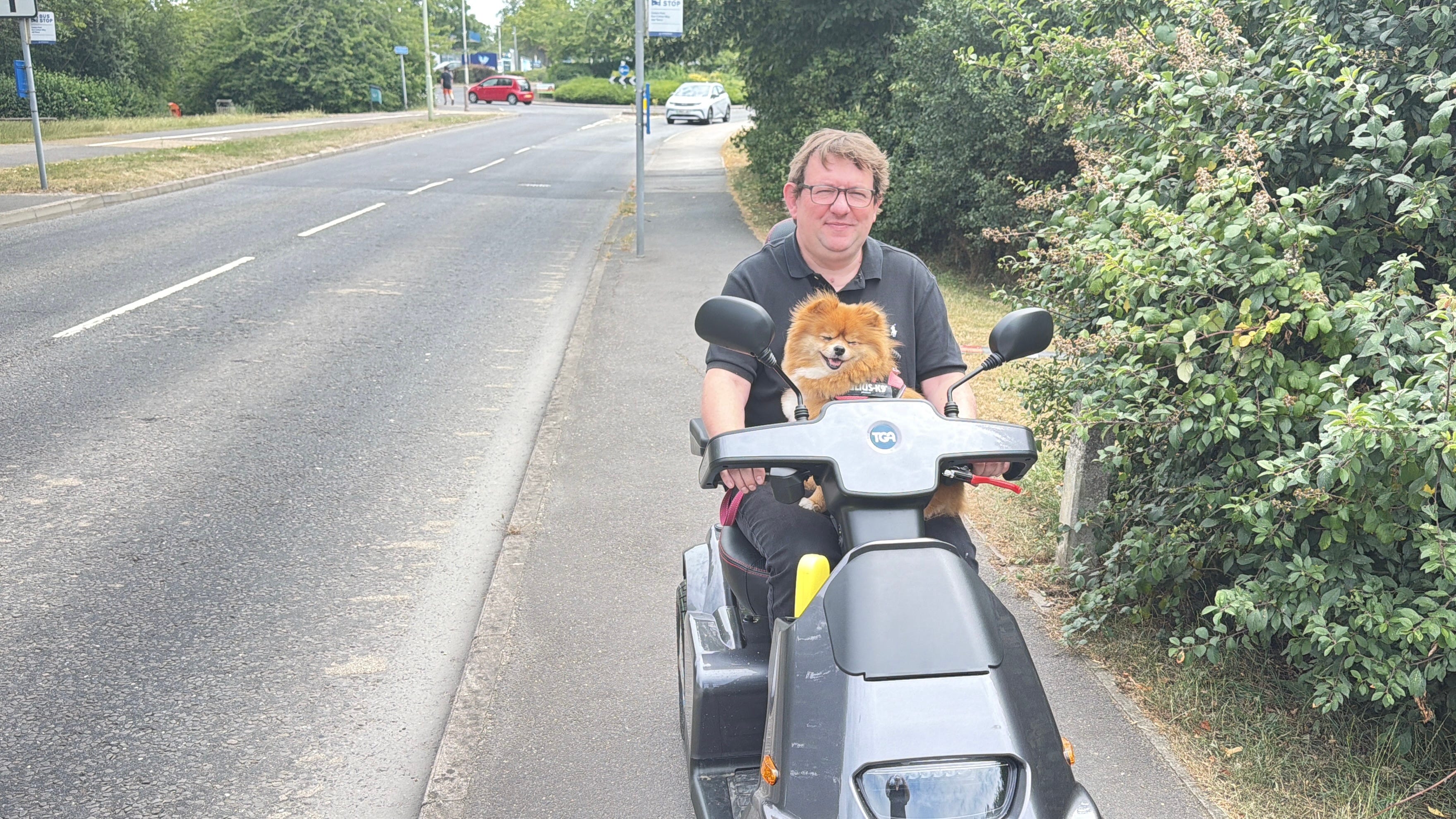
Recently, I have been becoming more confident in using my mobility aids.
That might sound like a strange thing to celebrate, but accepting them has been a long journey. For a long time, they felt like a symbol of everything I had lost. Now they have become something quite different. They are the reason I can still get out, visit family, go shopping, attend appointments and remain connected with the world beyond my front door.
At the same time, I have been trying to push back, very gently, against the deconditioning that can come with relying on a wheelchair or a mobility scooter. Most mornings, I now set aside a small amount of time for gentle movement. Nothing dramatic. No gym sessions or ambitious fitness plans. Just enough to remind my muscles that they still have work to do.
Living with Long Covid often feels like walking a tightrope.
Do too little, and your body becomes weaker. Do too much, and you risk post-exertional malaise, a worsening of symptoms that can leave you exhausted for days. It is a constant balancing act that many people simply do not see.
Lately, I have put on more weight than I would like, and I can certainly feel it. I know that carrying extra weight is not ideal for my heart, my joints or my overall health. Believe me, nobody reminds me of that more often than I remind myself.
Which brings me to last week.
I had a routine appointment with a cardiologist. There was nothing particularly alarming about it. Because of my family history, they simply like to keep an eye on things. My eldest daughter came with me for support because, if I am honest, I had been putting the appointment off for weeks.
The consultation began well enough.
“Mr Clarke, your scan looks fine, but given your history, we’d like to see you again in a year’s time.”
I breathed a sigh of relief.
Then she looked me up and down.
“I can see you’re a larger gentleman,” she said. “You really need to exercise.”
I swallowed and tried to explain.
“Since Covid, I haven’t been able to exercise in the normal sense. I have Long Covid, and exertion can trigger post-exertional malaise. If I overdo things, I can end up unable to do anything for several days. I have to balance everything very carefully.”
She listened before telling me about a time when she had undergone surgery and had been so tired afterwards that she could barely climb the stairs.
For a moment, I thought she was about to say she understood.
Instead, she concluded, “So I just did a bit of exercise and got back on track.”
I tried again.
I explained that my situation was different. That I wasn’t avoiding movement. That I was already trying to do what I safely could. That I depended on my mobility aids simply to get to appointments like this one.
As soon as I mentioned the wheelchair and scooter, she cut in,
“They’re absolutely the worst thing to use.”
And that was that.
The conversation was over.
I left the appointment feeling really upset.
Not because I disagree that movement matters. It absolutely does. Every person with Long Covid I know wishes they could move more than they currently can. None of us enjoys watching our fitness decline, and I bet not one of us wants to gain weight.
I have no desire to become dependent on mobility aids. We use them because they give us freedom.
Without my scooter, I would not have reached that appointment in the first place.
Without my wheelchair, there are many places I simply could not visit.
They do not replace exercise. They make life possible.
That is the dilemma so many people with Long Covid and ME/CFS live with every day.
The advice we receive from healthcare professionals is often based on conditions in which gradually increasing activity helps recovery. For illnesses involving post-exertional malaise, the equation changes. Exceed your body’s limits, and you do not necessarily become fitter. Sometimes you simply become ill again.
That does not mean giving up on movement.
It means approaching movement differently. Carefully. Thoughtfully. Patiently. Listening to a body whose limits seem to shift from one day to the next.
Five years after my diagnosis, I still find myself having to explain this.
That isn’t because doctors do not care. Most genuinely do. But Long Covid and ME/CFS continue to be poorly understood, and many patients are still finding themselves in consultations where their lived experience does not seem to fit the medical assumptions sitting in front of them.
Perhaps that is why so many of us leave appointments feeling not just unwell, but misunderstood.
If you have had an experience like this recently, I want to say something I wish someone had said to me after that consultation.
Please don’t feel guilty.
Needing a wheelchair does not mean you have failed.
Using a mobility scooter is not taking the easy option (it’s, of course, much more hassle).
Doing less than someone else expects is not laziness.
You are navigating an illness that asks you to solve an impossible equation every single day: move enough to stay healthy, but not so much that you become too ill to live your life.
That isn’t weakness.
It is one of the hardest balancing acts I have ever known.
And if you’re trying your best to walk that tightrope today, you are not walking it alone.
Paul.
I have produced a short book that details some of my podcasts in short, easily digestible chapters. You can read it when you have the energy. It’s available on Amazon here.
Sales of the book help cover the costs of the podcast and website, and I am very grateful to those of you who have purchased it so far.
Everything you said. True for me. Not telling you what to do but I would never go back to that cardiologist again. In the 6 yrs I’ve had LC, there are at least several doctors on my list that i never went back to for similar encounters. I am soooo very sorry that happened to you, Paul. That tightrope is real. I had something to leave the house for EVERY DAY last week & when today hit - I’ve been in bed all day. Living alone, I’ve gotten up for coffee (can’t live without it) and easy food to prepare to eat. 3 doctors appts in one week, even tho 2 of them are tried & true & help me, the new Neuropsychologist i had a phone consult with wore me out with squeezing my life story into 45 minutes (necessary, i realize) & it will be 2 months before i have a 2-4 hour visit with him. I’m usually better at planning than last week’s went but sometimes, esp with doctors, it’s unavoidable. I salute you for taking care of yourself, be it with mobility aids, meds or whatever else helps you at least have somewhat of the life you used to have. Thank you for sharing this & i am praying that your next appt with a medical person is much more smooth & the person YOU are paying has more compassion & knowledge about your condition or at least is willing to investigate it & learn more about it if they are continuing as your doctor. It will also help other people that dr treats in the future. Appreciate you sharing so much, so sorry that happened, i do know the feeling, & wish you the miracle of better health & healing every day. 🙏🫂❤️🩹🌈💝
Thank you for sharing this. I'm so very sorry your cardiologist treated you this way. I find it so perplexing and bewildering why after a pandemic and resulting Post Viral condition, that medical people continue to not be versed with Long Covid and with postexertional malaise. In the past I tried to explain Long Covid to my few friends, but they all think im malingering. Except for the one friend who is supportive by visiting me; but recently she told me I need to stop thinking I have Long Covid and instead think healing positive thoughts that my cells are healing. I hardly ever mention Long Covid. Again bewilderment. And hurt. Thank you for the reminder not to feel guilty. We need to use everything, including mobility aids to make our lives more liveable. You are seen. Our struggles are real. Bless you Paul.